

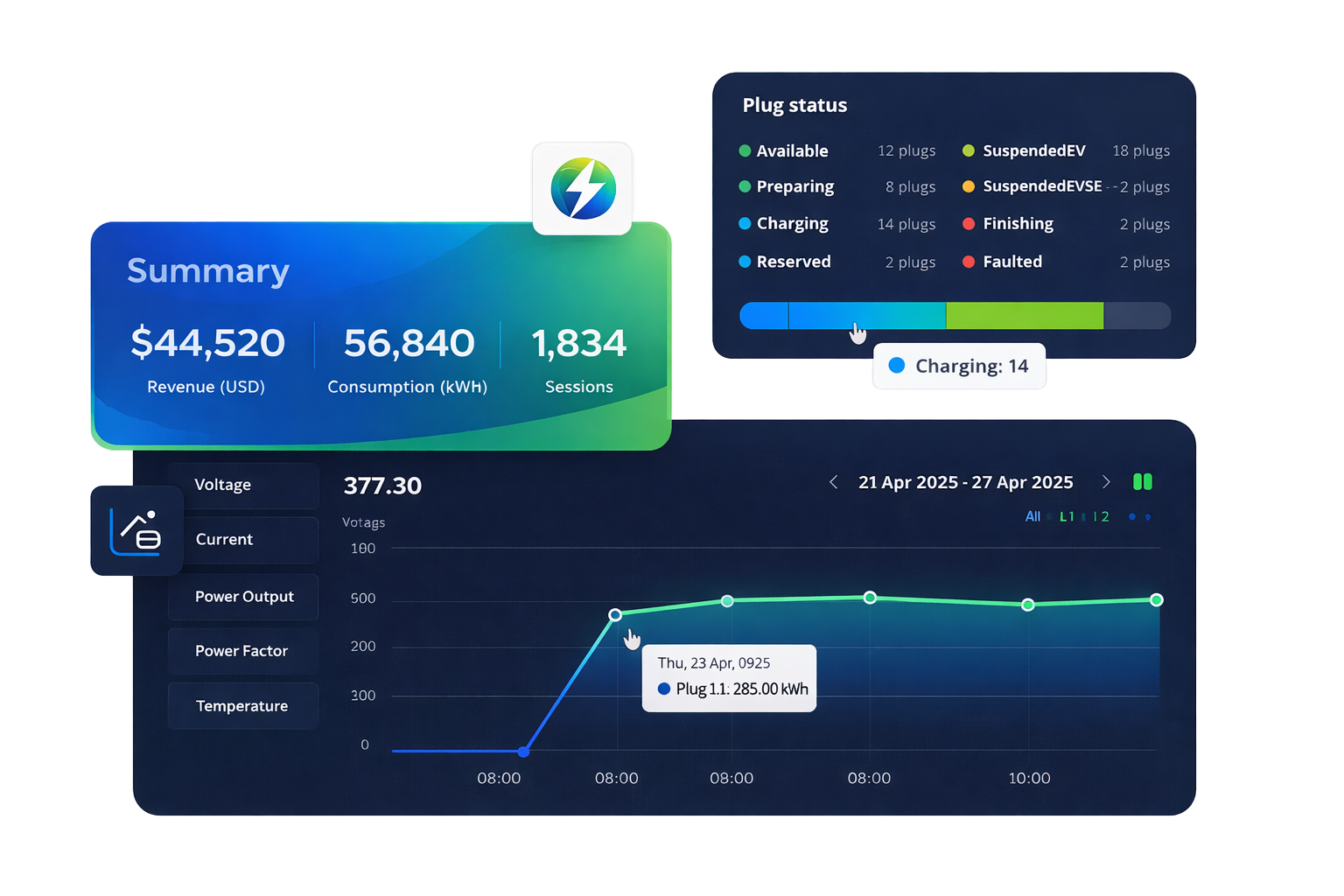
Commercial EV Charging. Site-Wide Energy Intelligence.
Premium AC and DC chargers, turnkey deployment, and the software that runs them, for businesses across Raleigh, Durham, Cary and Apex.
One partner for charging infrastructure, intelligent energy management, and ongoing support.
Plan
Site evaluation and utility capacity
Deploy
Permitting, installers, commissioning
Operate
Any OCPP charger, any brand
Optimize
Cost and margin per session
Solutions for Every Industry
Workplaces, multifamily, retail, hotels and hospitality, fleet depots and public networks. The same equipment and deployment process sits behind healthcare facilities and commercial real estate.
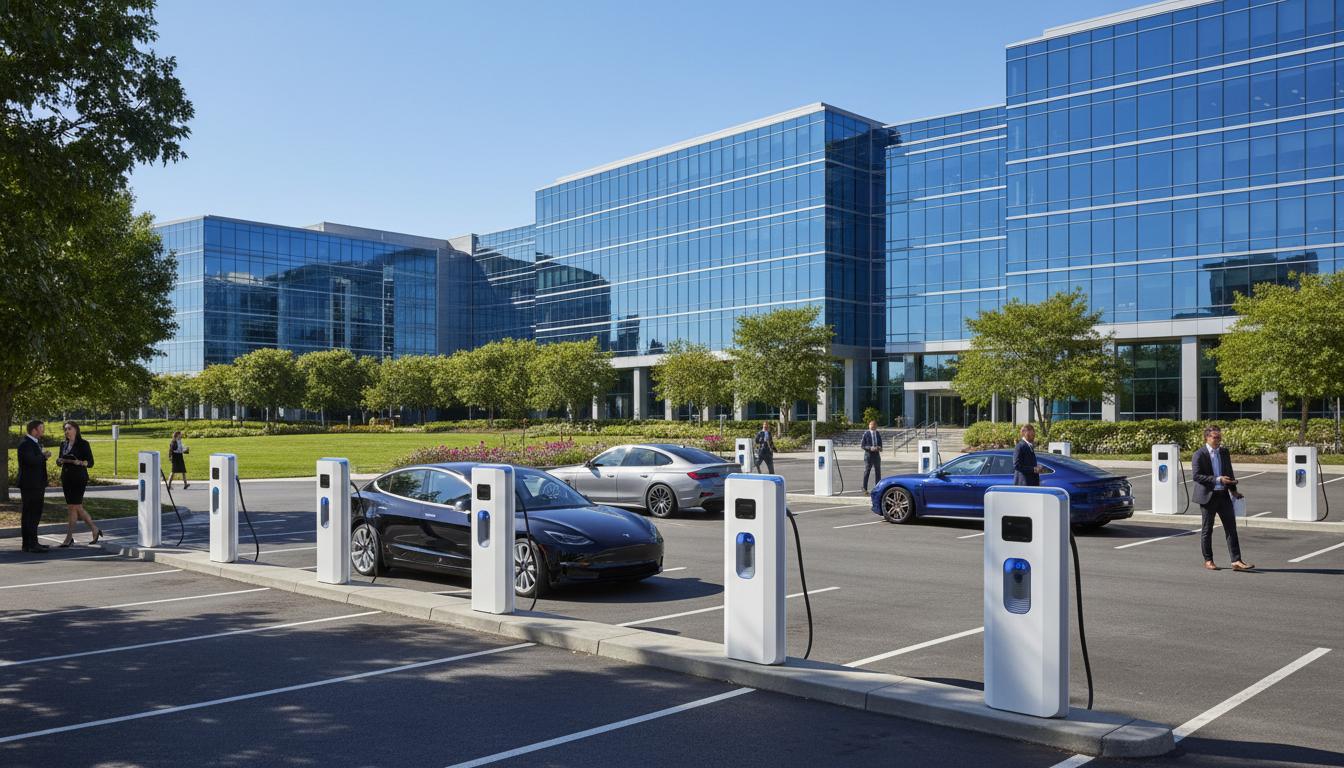
Staff and visitor bays with the longest dwell times of any segment, which is what makes AC Level 2 the right fit and keeps the electrical work modest.
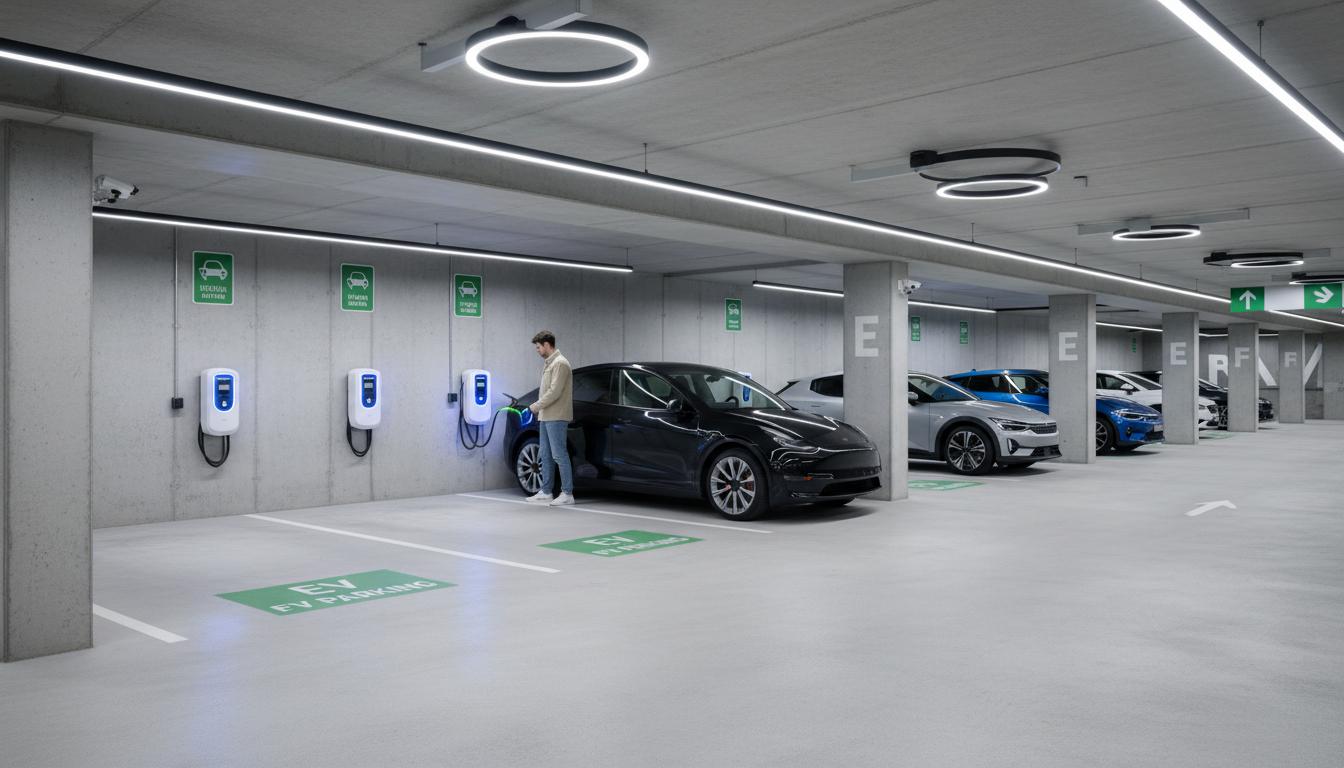
Assigned or shared resident bays charging overnight. Cost per bay governs how many go in, so shared circuits and load management do the heavy lifting.

Paid sessions for the public, with flat, time-of-use or dynamic pricing, instant payment and same-day settlement through AmpOn Pay.

Return-to-base vehicles charging on a schedule. The supply and the departure times set the design, and load management keeps the peak in bounds.
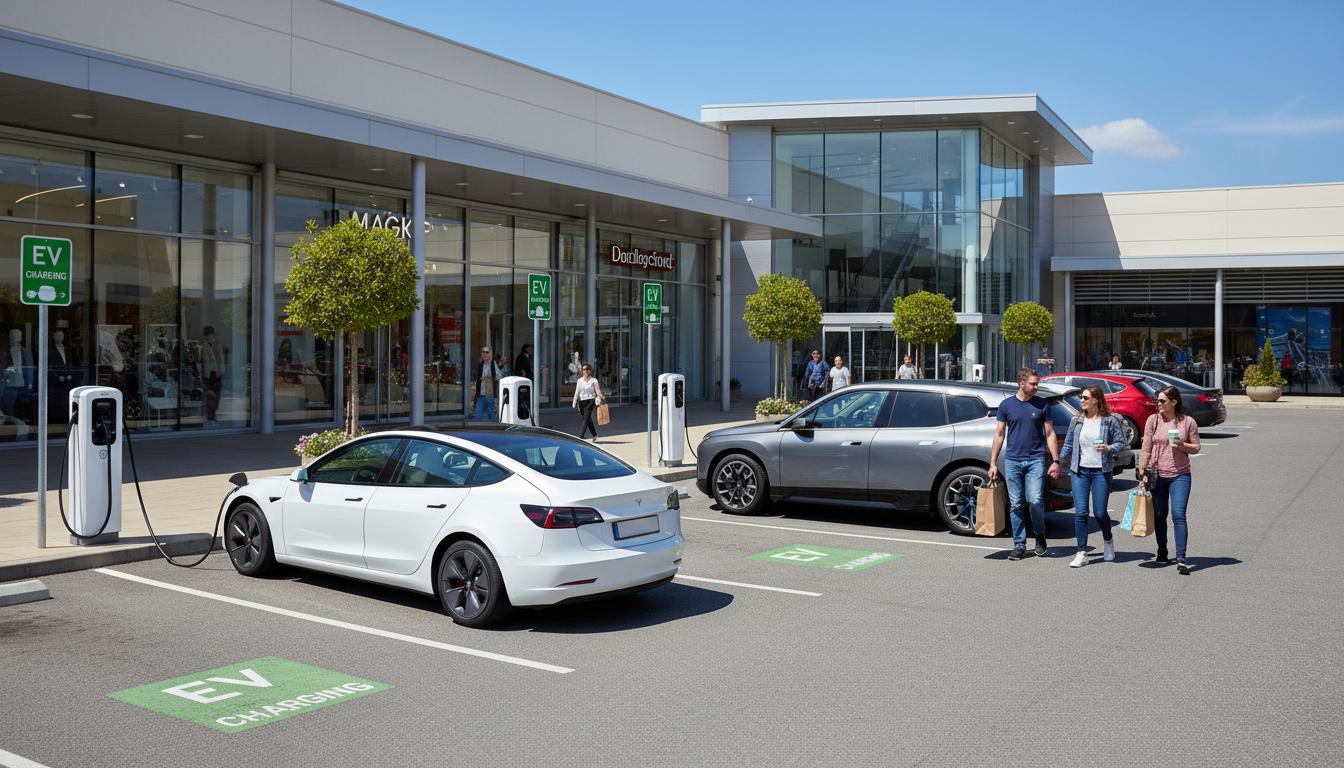
Short dwell and high turnover, where DC earns its cost. Forecourt sites are also where a charger-mounted screen has a real audience.
Staff and visitor bays with the longest dwell times of any segment, which is what makes AC Level 2 the right fit and keeps the electrical work modest.
Assigned or shared resident bays charging overnight. Cost per bay governs how many go in, so shared circuits and load management do the heavy lifting.
Paid sessions for the public, with flat, time-of-use or dynamic pricing, instant payment and same-day settlement through AmpOn Pay.
Return-to-base vehicles charging on a schedule. The supply and the departure times set the design, and load management keeps the peak in bounds.
Short dwell and high turnover, where DC earns its cost. Forecourt sites are also where a charger-mounted screen has a real audience.
One platform, the whole lifecycle
Plan a site, get it energized, run it, price it and know what every session earned. Hardware-agnostic and OCPP-native throughout, adopted one module at a time.
AmpOn Core
The operator control room
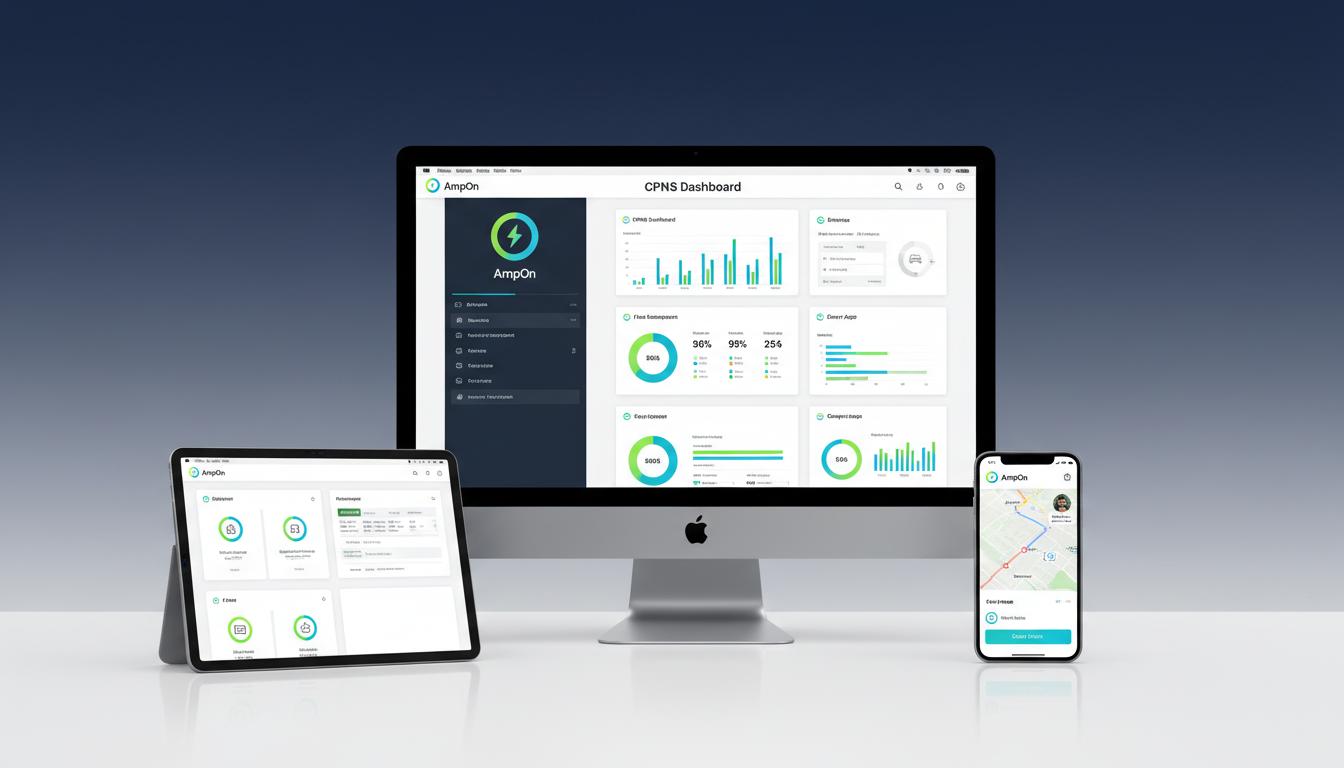
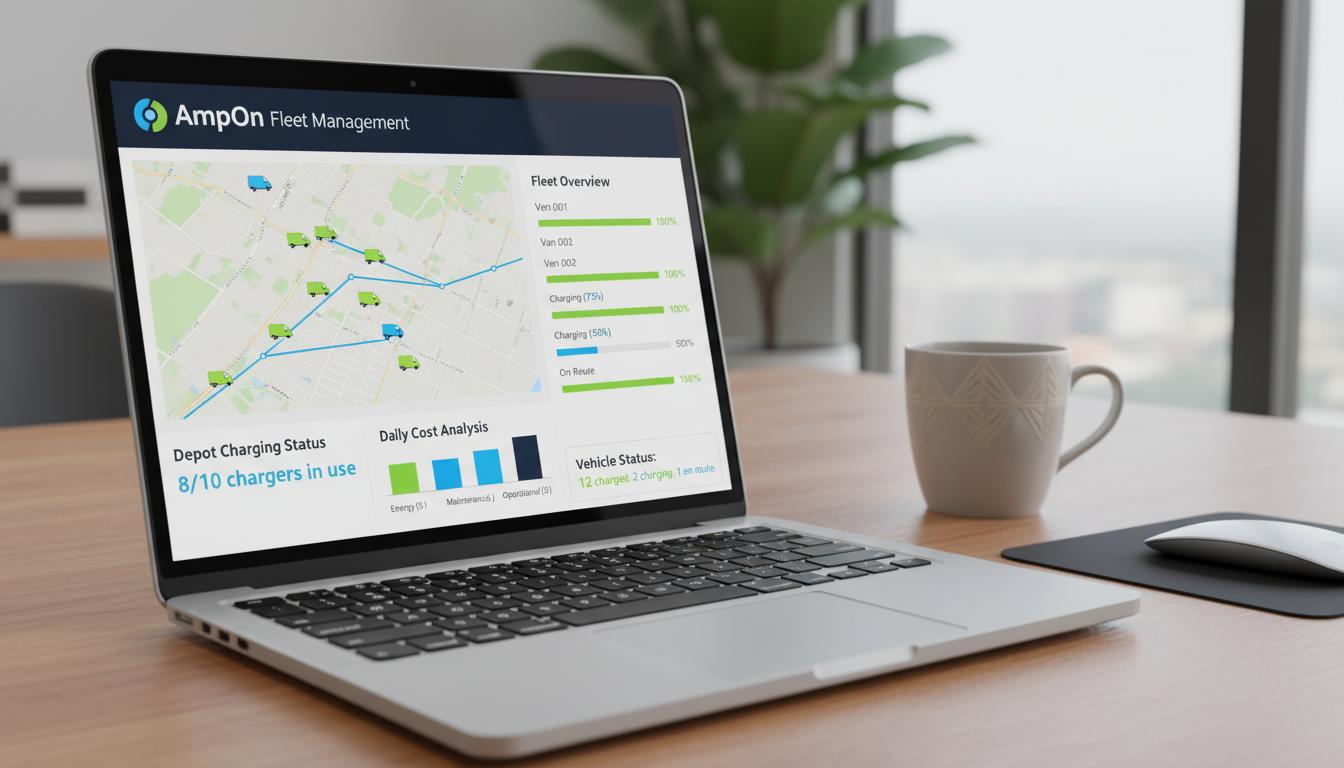
Enterprise CPMS for any OCPP-compliant hardware. Every charger, session and site in one view, with cost and margin attached to each one, which is the part a CPMS alone leaves out.
- Real-time monitoring and remote diagnostics
- Smart load management across shared circuits
- Role-based access and audit logs
- OCPP 1.6 / 2.0.1 and open APIs
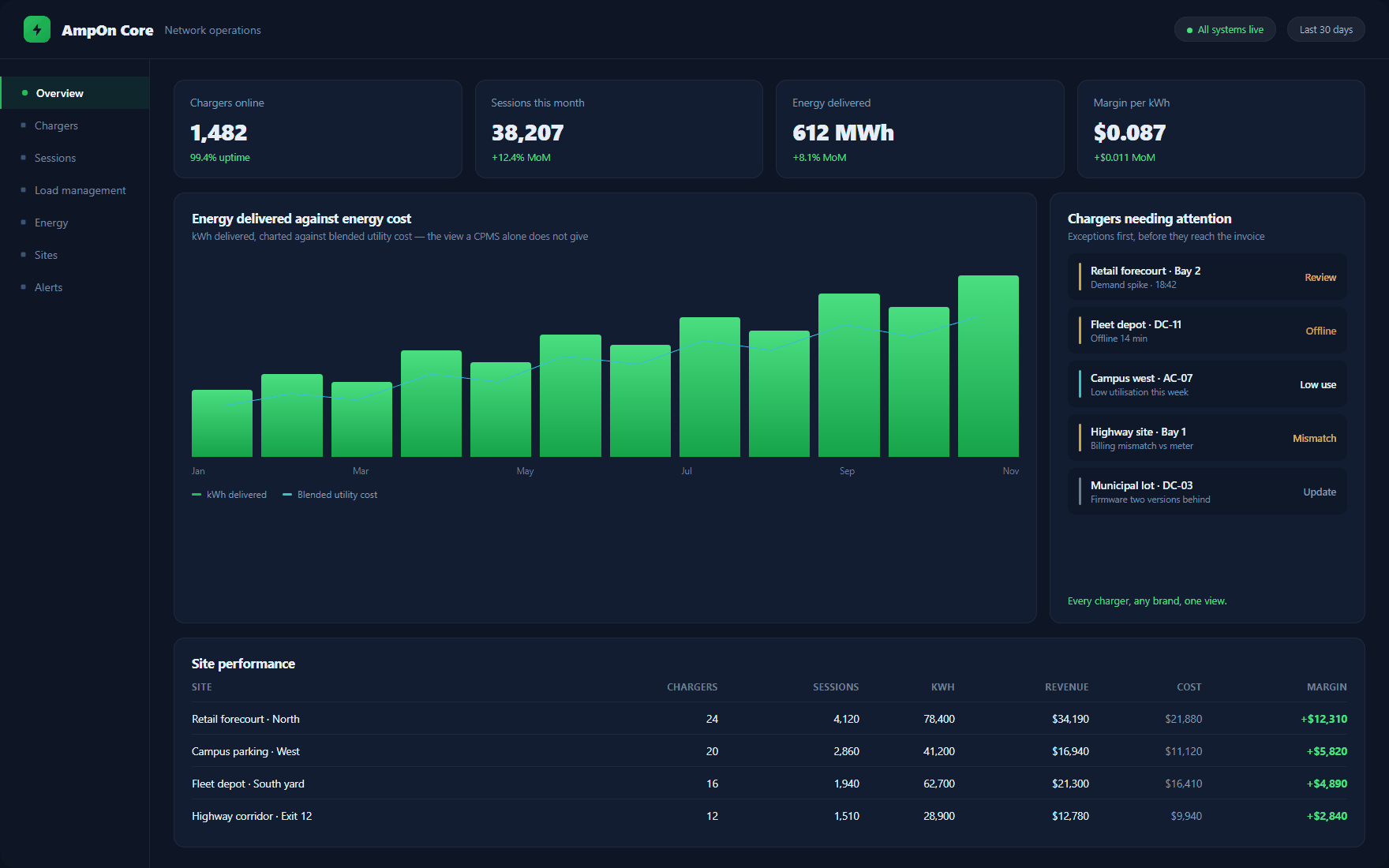
Network operations: energy delivered charted against energy cost
Swipe for more
Make more of your site’s available electrical capacity
AmpOn’s dynamic load management adjusts EV charging power in response to the building’s other electrical demands and the site’s configured limits. As building demand rises, charging power can be reduced; as capacity becomes available, charging can increase.
This helps businesses balance charging needs with building operations, manage peak demand, and potentially reduce the need for costly electrical upgrades. Available capabilities and results depend on site design, metering, charger compatibility, and configuration.
It adjusts EV charging only. It does not control a building’s other equipment, and it does not replace required electrical protection.
Building toward grid-connected charging
AmpOn’s roadmap extends beyond site-level charging management toward coordination with utility signals, demand response, and measurable charging flexibility. Our goal is to help businesses manage charging around grid needs while accounting for driver requirements and site constraints.
Not available today. Site-level load management, described above, is what runs now.
Hardware, installation, software and support
From site planning and installation to payments, dynamic load management and ongoing service, AmpOn helps businesses across Raleigh, Durham, Cary and Apex deploy charging and manage it with confidence. One partner rather than three.
Premium features, options for every budget
Ten platforms from a 9.6 kW home charger to a 240 kW fast-charging kiosk. We quote from a site evaluation, because the electrical work usually costs more than the charger.
Core of every project
Included as standard.
- Site planning and electrical capacity assessment
- Commercial AC Level 2 and DC charger selection
- Installation coordination and commissioning, through licensed installation partners
- Charger monitoring, remote diagnostics and management software
Added where a site needs it
Optional, priced per project.
- Instant payments and same-day settlement with AmpOn Pay
- Site-wide dynamic load management and energy reporting
- Ongoing service and support agreements
Not every hardware purchase includes every service. What is in scope for a given project, including installation, is set out in the project proposal.
Everything between an empty site and a paid session
Planning and permitting, charger operations, payments and energy economics. One platform rather than five that do not talk to each other.

Smart Load Management
Optimize power distribution across your charging network to avoid peak demand charges and reduce energy costs.
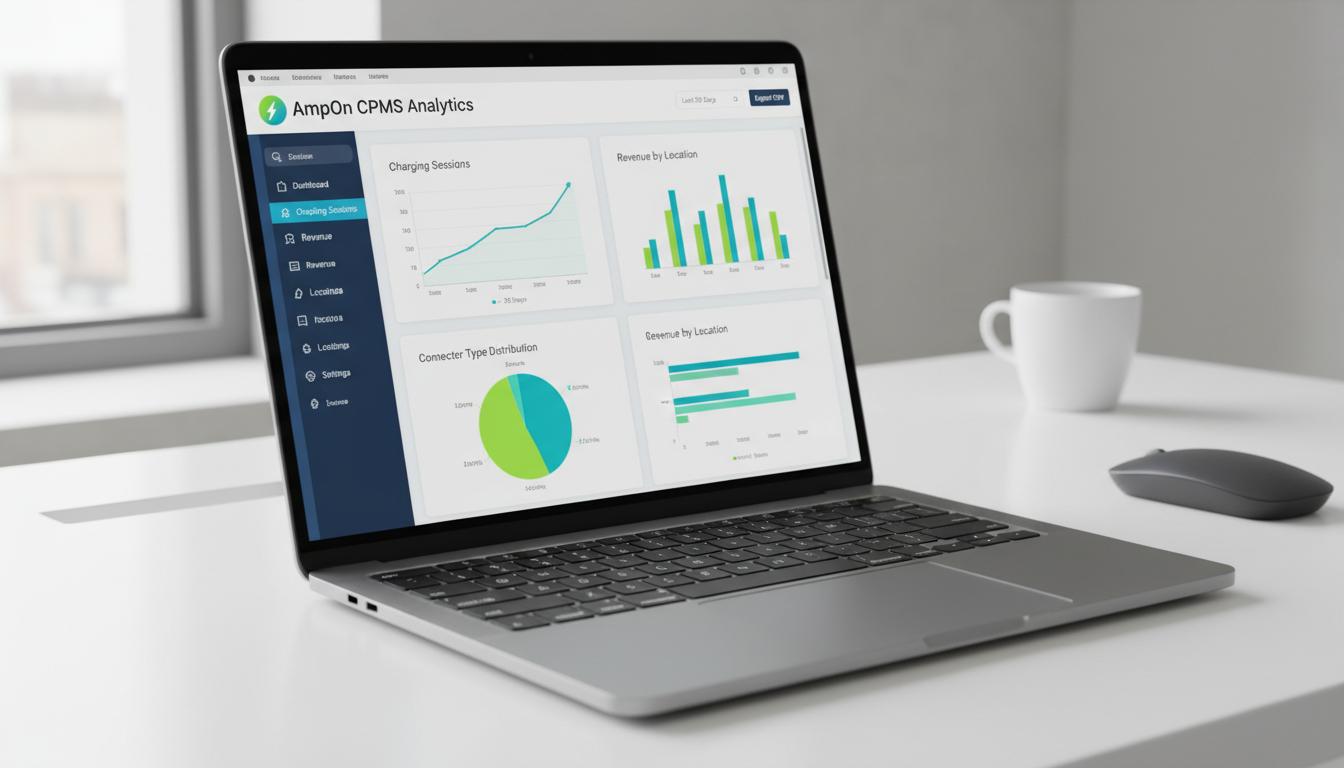
Cost and demand models
Models that read session and tariff data to predict maintenance needs, optimize pricing, and maximize network utilization.
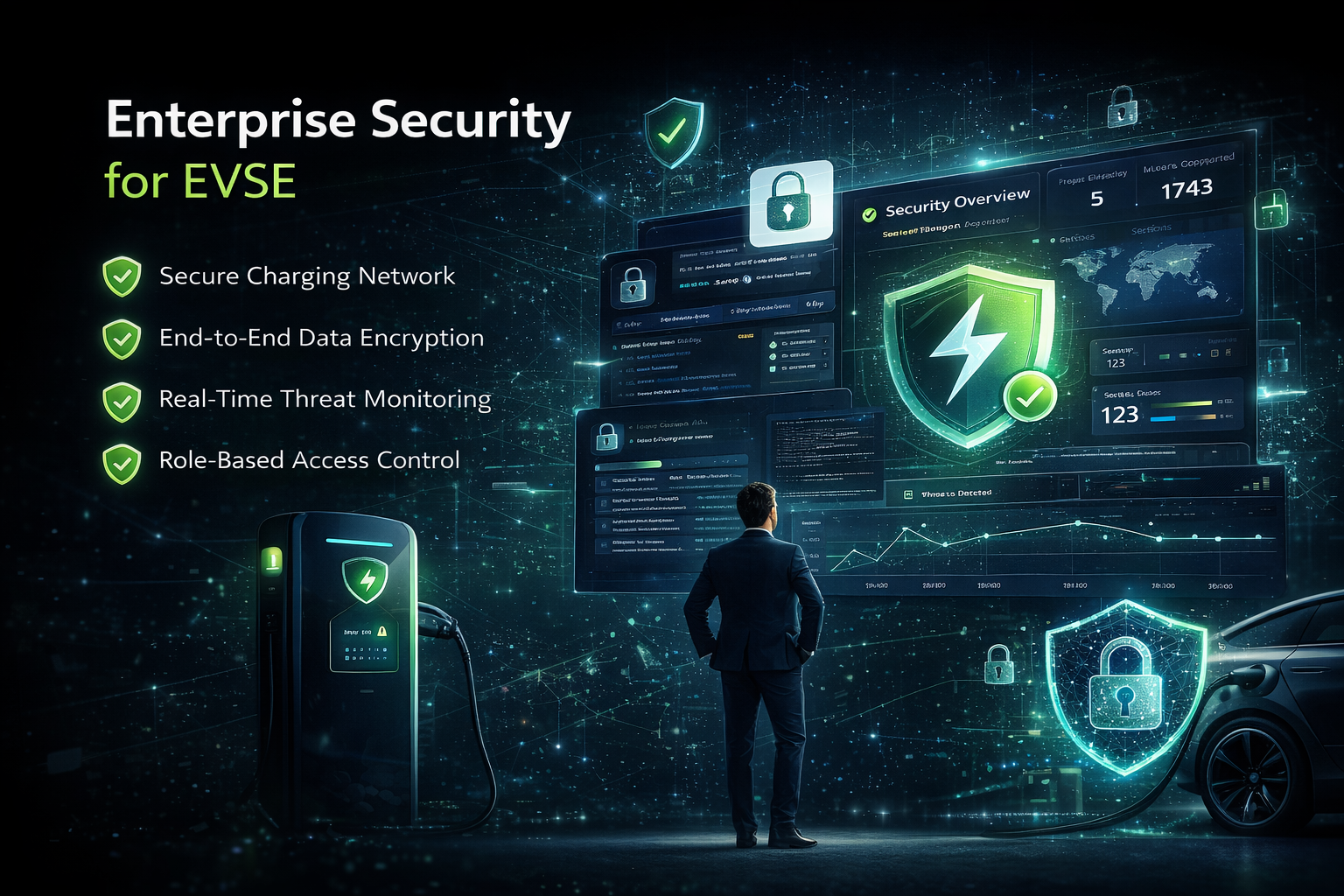
Enterprise Security
End-to-end encryption, role-based access control, and comprehensive audit logs.
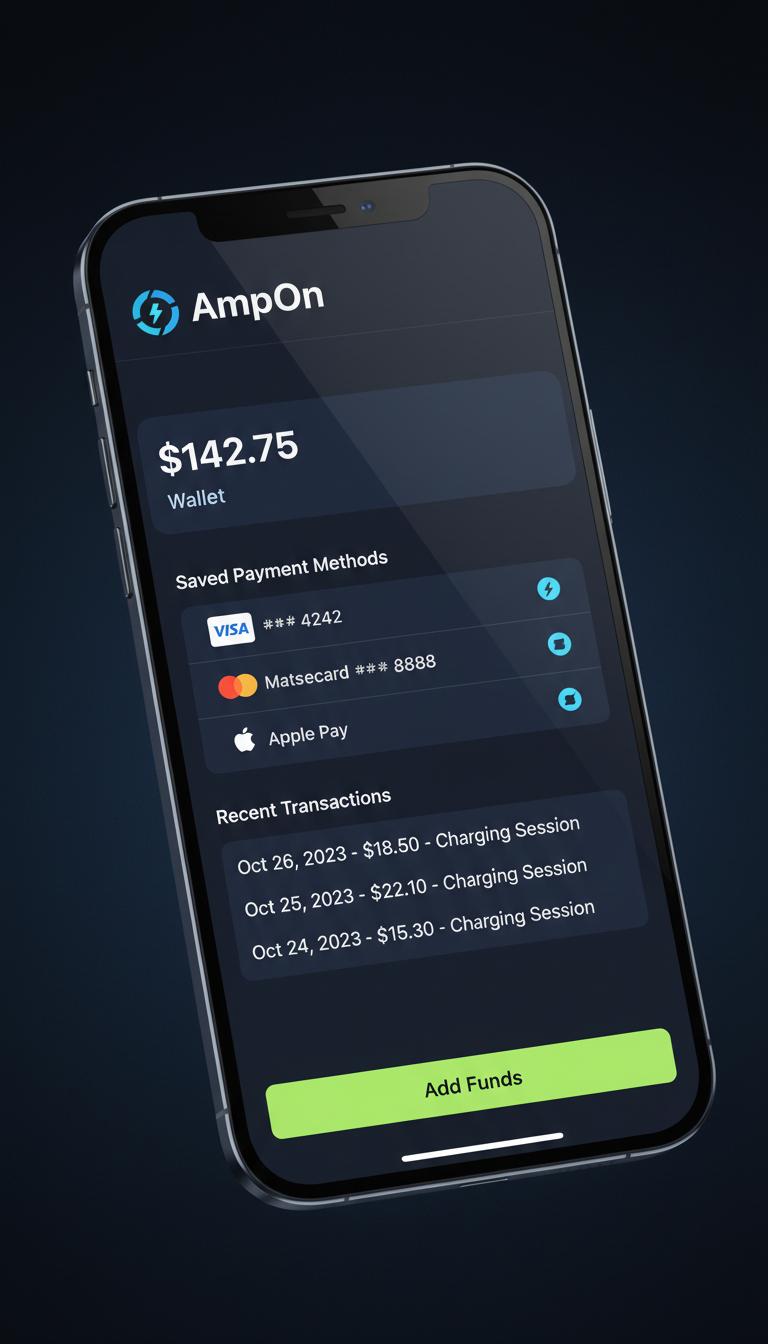
Flexible Payments
Support multiple payment methods including credit cards, mobile wallets, RFID, and subscription billing.
OCPP Compatible
Works with 200+ OCPP-certified hardware models. Easy integration with existing charging infrastructure.
24/7 Support
Round-the-clock technical support for operators and drivers via phone, email, and live chat.
From empty site to margin per session
Evaluation and permitting through to knowing what each kilowatt cost you. Adopt the whole lifecycle or only the part you are missing.
Plan and energize the site
Site evaluation, utility coordination, permitting and commissioning, on our hardware or whatever you already own.
Configure and price
Access control, time-of-use pricing and branding, set once and applied across every site.
Operate and settle
Monitoring, diagnostics and load management, with driver payments settling the same day.
Know what it earned
Use cost and demand models to price sessions, predict maintenance, and plan network expansion.
Universal Hardware Compatibility
AmpOn is built on OCPP 1.6J and 2.0.1 with open APIs, so it runs on our own hardware or on chargers you already own. Compatibility is confirmed per make, model and firmware. No vendor lock-in, no exit fees.
More than charger management
Competitors start after the charger is installed and stop at the utility bill. AmpOn covers what happens before and after: planning, deployment, operations, payments and the true cost of every kilowatt.
Whole lifecycle
One operating system covering planning, deployment, operations, payments and energy economics, from driver apps to backend management.
Deployment included
Site evaluation, permitting, vetted installers and commissioning: the part that actually decides when a site starts earning.
Energy economics built in
Cost and margin attached to every session, with the demand charge traced back to the sessions that caused it.
Hardware, or not
Our own DC and AC units when you want turnkey, and any OCPP charger when you do not. Never a condition of the platform.
Serving the Research Triangle
AmpOn works with businesses in Raleigh, Durham, Cary and Apex and the surrounding Research Triangle, North Carolina.
- Raleigh
- Durham
- Cary
- Apex
Frequently asked questions
Yes. AmpOn supplies commercial AC and DC charging hardware and supports the deployment around it: site evaluation and electrical capacity assessment, permit tracking, utility coordination, and commissioning. Installation itself is carried out by licensed installation partners that AmpOn coordinates. The scope of what is included on any given project is set out in the project proposal.
Yes. AmpOn works with businesses across Raleigh, Durham, Cary, Apex and the surrounding Research Triangle in North Carolina.
The hardware is usually not the largest line. Cost is driven by the electrical work: how far the supply has to run to the parking bays, whether the route is open-cut or existing conduit, whether the site needs a service upgrade or a transformer, how many bays are being energised at once, and local permit and utility application requirements. Site works are largely one-off, so cost per port falls as more chargers go in at the same time.
Yes. AmpOn Pay supports instant payments with same-day settlement, and pricing can be flat, time-of-use or dynamic. Fleet billing and cost centres are supported, along with revenue reporting and reconciliation.
It means EV charging power is adjusted against the rest of the building’s electrical demand and the limit configured for the site, rather than being fixed. As building demand rises, charging power can be reduced; as capacity frees up, charging can increase. It applies to EV charging only, and does not control a building’s other equipment.
It can help. Under NEC 220.57 the calculated load for sizing a service may be taken from a listed energy management system’s setpoint rather than full charger nameplate, which can bring the required service size down. It does not remove the need for a site assessment, and it cannot go below the floor set by the largest single branch device. Whether an upgrade is avoidable on a specific site is a question for that site’s electrical design.
Yes. The AC range covers single and dual-port units for workplaces, multifamily and shared parking, including models that share power dynamically across their ports. The DC range runs from compact units suited to retail and depots through to higher-power cabinets.
In most cases, yes. AmpOn’s management software is built on OCPP 1.6J and 2.0.1 with open APIs, and AmpOn hardware is an option rather than a requirement. Support depends on the specific make, model and firmware, so existing equipment is confirmed on a per-model basis before anything is committed.
No. Coordination with utility signals, demand response participation and measurable charging flexibility are on AmpOn’s roadmap, not available today. What is available now is site-level dynamic load management, which works against the site’s own demand and configured limits.
Plan the right charging solution for your property.
Tell us about your location, parking spaces, and charging goals. AmpOn can help you evaluate equipment, deployment, and energy management options.